Experiential Attachment Workshops
Exploring the way we care, connect and relate
I offer introductory, three-day and ongoing experiential workshops for professionals whose work involves caring for, supporting or working closely with others, as well as anyone interested in personal development, self-reflection and exploring the patterns that shape their relationships and wellbeing.
The workshops are suitable for counsellors, psychotherapists, physiotherapists, social workers, teachers, foster carers, doctors, consultants, surgeons, nurses, care assistants, solicitors and many others.
You don't need to work in a caring profession to take part — curiosity about yourself and a willingness to explore are what matter.

The way you care matters.
When we spend much of our lives caring for others, it can be easy to become highly attuned to their needs while losing touch with our own. The workshops offer an opportunity to step “off duty” and become curious about our own patterns — how we give care, seek care, protect ourselves, connect with others and create the conditions that support our wellbeing and vitality.
The workshops use The McCluskey Model for Exploring the Dynamics of Attachment in Adult Life, a comprehensive framework for exploring patterns of relating and the different systems involved in human activity.
Rather than simply learning about attachment intellectually, the workshops offer an experiential opportunity to explore these patterns for yourself — developing greater self-awareness and understanding of how they may influence your relationships, your work and your wellbeing.
The different workshops offer varying levels of depth, from an introductory experience through to immersive three-day workshops and ongoing groups where the seven attachment systems can be explored sequentially.
No previous knowledge of attachment is needed. All that is required is an interest in exploring yourself and the way you relate to others and the world around you.
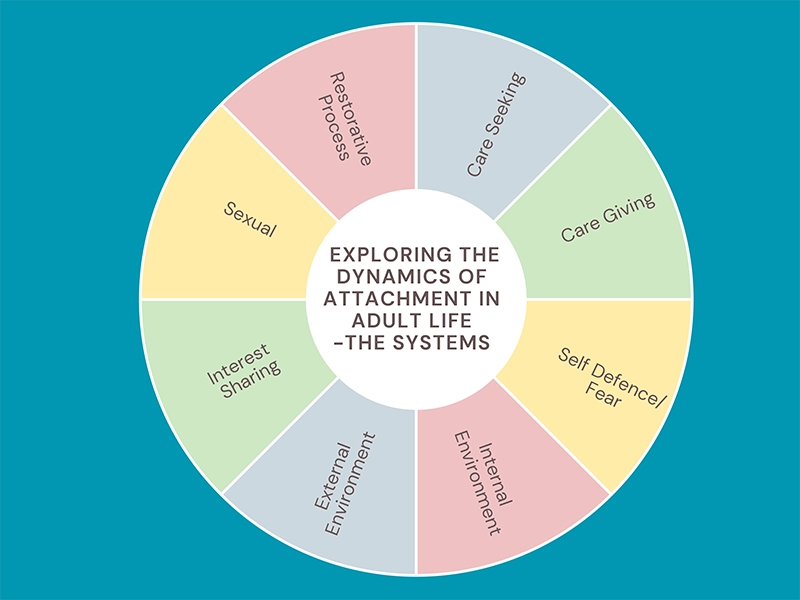
“The dynamics of attachment consist of several goal-corrected systems. These are careseeking, caregiving, sexuality, exploratory interest sharing with peers, the personal system for self-defence, the internal supportive or unsupportive environment and the personally created external supportive environment (home/lifestyle). The theory suggests that these systems work together as a single process to contribute to and maintain maximum wellbeing.”
Subscribe to my mailing list
Click below for more information on:
What is Attachment
Attachment is a biological system, present from birth, designed to help us survive, stay safe and maintain connection with others.
From the very beginning of life, we are biologically predisposed to seek the protection and care of others when we are vulnerable or afraid. As babies and children, we depend on caregivers to help us feel safe, regulate our emotions and make sense of the world around us.
Attachment isn't something we grow out of. It remains with us throughout the whole of life — from cradle to grave.As adults, we continue to seek connection, care, protection and support, particularly when we are frightened, vulnerable, stressed or in need.
Through our early relationships, we develop patterns of how we give and receive care, how we seek support, how we respond when we feel threatened, and how safe we expect relationships and the world around us to be.
When these experiences take place within a sufficiently safe and responsive environment, they can provide a secure foundation from which we can explore, connect and develop.
But when our early experiences involve fear, inconsistency, absence or a lack of reliable care, we may develop ways of relating that helped us cope at the time but may no longer fit our lives as adults.
These patterns can stay with us, often outside of our awareness, influencing our relationships, our work, our wellbeing and the way we care for ourselves and others.
Exploring attachment gives us an opportunity to become curious about these patterns — to understand where they may have come from, how they operate in our lives now, and what happens when we begin to experience them differently.
Who are the workshops for
The workshops are open to anyone interested in self-reflection, personal growth and developing a deeper understanding of themselves, their relationships and the way they care.
They may be particularly relevant for people in caring and relational roles — including therapists, counsellors, supervisors, social workers, teachers, healthcare professionals, foster carers, coaches and others who spend much of their working lives supporting and caring for others.
For those working in demanding caring roles, the workshops can provide an opportunity to step “off duty”, reconnect with the conditions that support their own wellbeing and become curious about patterns that may contribute to depletion, stress or burnout.
They offer space to explore what supports vitality, creativity, connection and wellbeing, both personally and professionally.
The Workshop Approach
From understanding to experience
Attachment theory helps us understand how our early experiences of giving and receiving care can shape our expectations, responses and ways of relating throughout adult life.
But understanding attachment intellectually is only part of the picture.
These workshops offer a structured and facilitated opportunity to explore these patterns experientially — noticing how they show up in your thoughts, feelings, bodily responses, behaviours and relationships.
Rather than simply learning about attachment, you are invited to become curious about your own experience: the way you seek care, give care, protect yourself, connect with others and respond when you feel vulnerable or under threat.
This can create opportunities to recognise familiar patterns, understand them in new ways and, where appropriate, discover different possibilities for relating — supporting greater wellbeing, vitality and creativity.
Explore Further
Explore the model
The McCluskey Model for Exploring the Dynamics of Attachment in Adult Life provides the framework used throughout these workshops.
The diagram below offers a visual introduction to the different systems explored within the model.
For further information about the model, you can visit:
https://aedaa.co.uk/the-mccluskey-model/
Read about the development and history of the model.:
https://aedaa.co.uk/the-mccluskey-model/history-of-the-mccluskey-model/
Keep in touch
Subscribe to my mailing list to receive advance notification of new workshops, events and available places, before they are shared more widely.
You can also follow me on Facebook for updates and new event information.
Two papers-Understanding the self and understanding therapy: an attachment perspective, and The therapist as a fear-free caregiver: supporting change in the dynamic organisation of the self can be read here: https://www.tinaabbottcounselling.co.uk/resources/downloads
Comic Images from: Connection Comics. Our relationship with ourselves and others CopyrightÓ2025 Joanna Stevens All images used with permission
Enquire and book
If you’d like to check availability, ask a question, or book your place, email Tina.